Calorie counting: how to count calories without hating it
Does calorie counting work? Learn what to measure, what to estimate, how to keep a useful food log and when tracking is no longer helping.
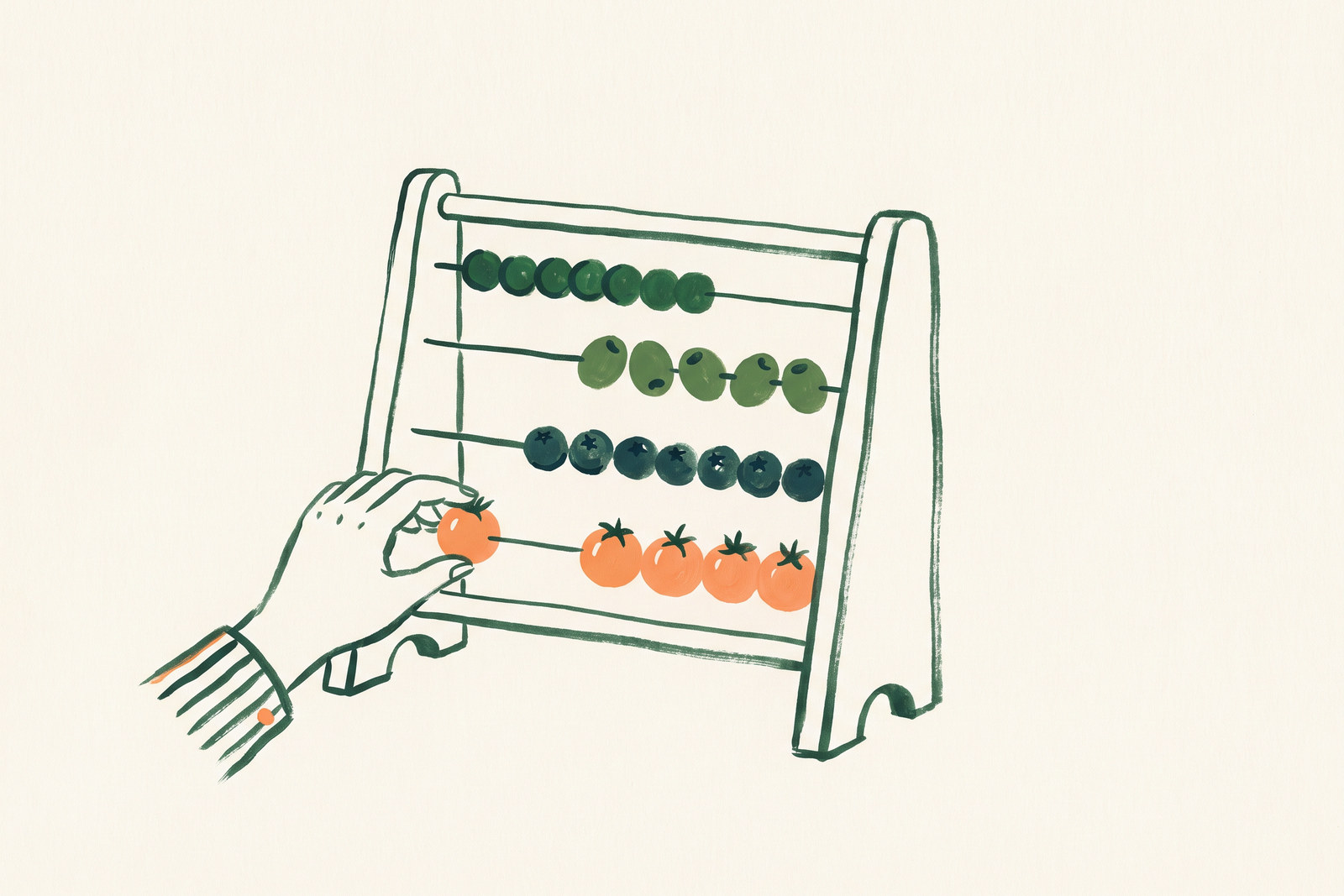
Count calories by doing the high-value parts accurately and the rest consistently. Measure calorie-dense ingredients, use labels for packaged food, estimate simple whole foods, and never abandon a day because one meal was uncertain. A complete 80%-accurate log teaches you more than a perfect breakfast followed by silence.
The goal is not to prove you ate well. It is to leave a useful record.
HeyCoach makes that record easy to keep: send a photo, a sentence or a voice note in WhatsApp and it returns the calories and macros for you to confirm. You can try it free for five days.
Does calorie counting work?
It can help by making intake visible and repeatable. Analyses of dietary self-monitoring in weight-loss interventions associate more consistent logging with better outcomes, but that does not establish that any particular app or exact calorie target causes success. Use it as a feedback tool, and step back if the record starts driving anxiety or rigid eating. Research on logging frequency and consistency
The five-minute method
Use this order for each meal:
- Name what you ate in plain language.
- Use the package serving and Nutrition Facts for branded foods.
- Measure oils, nut butter, dressings, cheese and other dense extras when practical.
- Estimate low-calorie vegetables and uncomplicated whole foods.
- Log before eating when you can; repair the entry afterward when you cannot.
Pre-logging turns the number into a choice. If dinner is going to be 850 kcal and you have 600 left, you can change the portion, swap a side or decide that tonight is worth going over. Logging after the fact is still valuable. It is information, not a confession.
Research on app-based dietary self-monitoring supports consistency over theatrical precision. In one study, frequency and consistency of logging were associated with weight loss, while “complete” logging was not clearly associated. Another six-month analysis found that tracking at least two eating occasions per day explained more variation in weight loss than several stricter definitions of adherence.
What deserves a scale or measuring spoon
Measure the foods where a small visual miss carries a large calorie miss:
- cooking oil and butter;
- peanut butter, nuts and seeds;
- salad dressing and mayonnaise;
- cheese;
- dry rice, pasta, oats and cereal until you learn your usual serving;
- baking ingredients;
- calorie-containing drinks and alcohol.
A tablespoon of olive oil is roughly 120 kcal. Calling two tablespoons “a drizzle” can move a 500-kcal dinner to 740 without changing how full the plate looks. By contrast, mistaking 100 g of broccoli for 140 g barely matters to the day's total.
This is not a command to weigh every strawberry forever. Use a kitchen scale as a short learning tool. After several repeats, you will know what your bowl, scoop and usual slice look like.
A worked dinner
Suppose you make a chicken rice bowl:
| Ingredient | Amount | Calories | Protein |
|---|---|---|---|
| Cooked chicken breast | 150 g | 250 | 46 g |
| Cooked rice | 180 g | 235 | 4 g |
| Black beans | 100 g | 130 | 9 g |
| Peppers and onions | 150 g | 60 | 2 g |
| Olive oil | 1 tbsp | 120 | 0 g |
| Salsa | 60 g | 25 | 1 g |
| Total | 820 kcal | 62 g |
The vegetables can be estimated. The tablespoon of oil and rice portion deserve attention. If half the oil stayed in the pan, the consumed total may be lower; if “one tablespoon” was poured freehand, it may be higher. Log 820, note the assumption, and move on.
If you later realize you ate only three-quarters of the rice, correct the meal by about 60 kcal. Corrections are part of tracking—not evidence that the original log failed. Cooking a whole pot rather than one bowl? How to calculate calories in a recipe shows the cooked-weight method, and the calorie chart lists typical values for 80 common foods.
How to read a label without being fooled by it
Start with serving size, then servings per container. If a package says 160 kcal per 28 g and you eat 42 g, the math is:
160 × 42 ÷ 28 = 240 kcal
Labels are not laboratory reports for the exact item in your hand. The FDA's compliance approach allows some variation; for calories and several other nutrients, a composite laboratory value generally must not exceed 120% of the declared amount to remain compliant. Rounding and natural product variation add more noise.
That does not make labels useless. It means consistent use of the label beats false precision. Use the printed serving, check that the database entry matches it, and do not “correct” every package with an internet estimate.
For a package with a clear label, a photo logger should read the label rather than infer food from appearance. HeyCoach's WhatsApp calorie counter uses official published nutrition for recognizable branded items and lets you correct any assumption in a reply.
Restaurants: choose a defensible estimate
For a chain, use the restaurant's current nutrition calculator. Match size, protein, sauce and add-ons. Portions still vary, but published data is more defensible than selecting a similarly named user entry.
For an independent restaurant:
- find the closest published chain dish or plain-food components;
- choose the middle of a plausible range, not the lowest result;
- add visible oils, creamy sauces and cheese separately;
- record one estimate and enjoy dinner.
If the dish is clearly richer or larger than the comparison, add 20–30%. Do not spend twenty minutes searching for a number that nobody measured.
The three rules that keep the habit alive
1. Log before you eat
This removes memory work and shows the trade before it happens. It is especially useful for snacks, drinks and dinner ingredients.
2. Fix it later
Restaurant plans change. Portions differ. You remember the second beer on the walk home. Update the record tomorrow if needed. A mutable log is more honest than a pristine one.
3. Never skip the “bad” day
The day you overshoot is the day with the most useful information. Weekend drift, alcohol, grazing and takeout are hard to solve if they vanish from the record. Write “restaurant burger and fries, estimate 1,100” and keep going.
Do not cut tomorrow's food as punishment. Return to the regular target. One high day changes a weekly average; it does not erase the week.
How accurate does calorie counting need to be?
Accurate enough to detect the gap between your plan and your result. If the scale trend matches expectations, your system is working even if every entry contains small error. If the trend is flat, improve the biggest uncertainties first.
Audit in this order:
- missing days and weekend meals;
- oils, sauces, drinks and snacks;
- package serving math;
- cooked-versus-raw database entries;
- restaurant portions;
- tiny differences in vegetables.
Do not respond to a plateau by obsessing over lettuce. Read what is usually going on when you are not losing in a deficit and make one change at a time.
Calorie counting is also not appropriate for everyone. If tracking fuels anxiety, rigid rules, binge-restrict cycles or compensatory exercise, stop and speak with an eating-disorder-informed clinician. A tool is only useful while it serves you.
FAQ
Does calorie counting work for weight loss?
It can help people monitor intake and notice patterns. Consistent logging is associated with better outcomes in weight-loss interventions, but it does not guarantee a deficit or a particular result.
Is calorie counting bad for you?
It is not appropriate for everyone. If it increases anxiety, restriction, binge-restrict cycles or compensatory exercise, stop and discuss a different approach with an eating-disorder-informed clinician.
How long should I keep counting calories?
Long enough to learn useful portions and patterns, then reassess. You can move to repeat meals or occasional checks if they support your goals without needing a detailed daily record.
Do I have to weigh all my food?
No. Weigh calorie-dense ingredients and unfamiliar portions for a while; estimate low-calorie foods and repeat meals once you know them. The habit should get lighter with practice.
Should I count vegetables?
Include them, especially starchy vegetables, but do not chase gram-level precision for leafy greens. Oils, dressings and toppings usually matter much more than whether the broccoli was 90 or 120 grams.
Is it better to count calories before or after eating?
Before is useful because it informs the choice. After is still valuable because it preserves the record. The only unhelpful time is “never” because the meal felt difficult to estimate.
Sources
- FDA guidance on nutrition-label compliance and calorie variation
- Payne et al., consistency and frequency of dietary self-monitoring
- Turner-McGrievy et al., practical markers of logging adherence
- NIDDK guidance on tracking progress and setbacks
The easy way to do this
HeyCoach turns a sentence, voice note or food photo into an editable meal card inside WhatsApp. It shows calories and macros before anything is confirmed, and “it was half the bowl” can fix the estimate—even later. The method works because the log stays easy enough to keep on imperfect days. Try it free for five days, no card needed.
More on Calories & the deficit
Editorial and review policy. No independent dietitian review is claimed unless a reviewer is named.
HeyCoach is a nutrition coach, not a medical service. This article is general information, not medical advice — talk to your doctor before changing your diet if you have a medical condition, are pregnant, or take medication.