High-protein snacks that fit a calorie deficit
Compare high-protein snacks by grams per 100 calories, with store-bought and homemade choices plus the label traps worth checking at a glance.
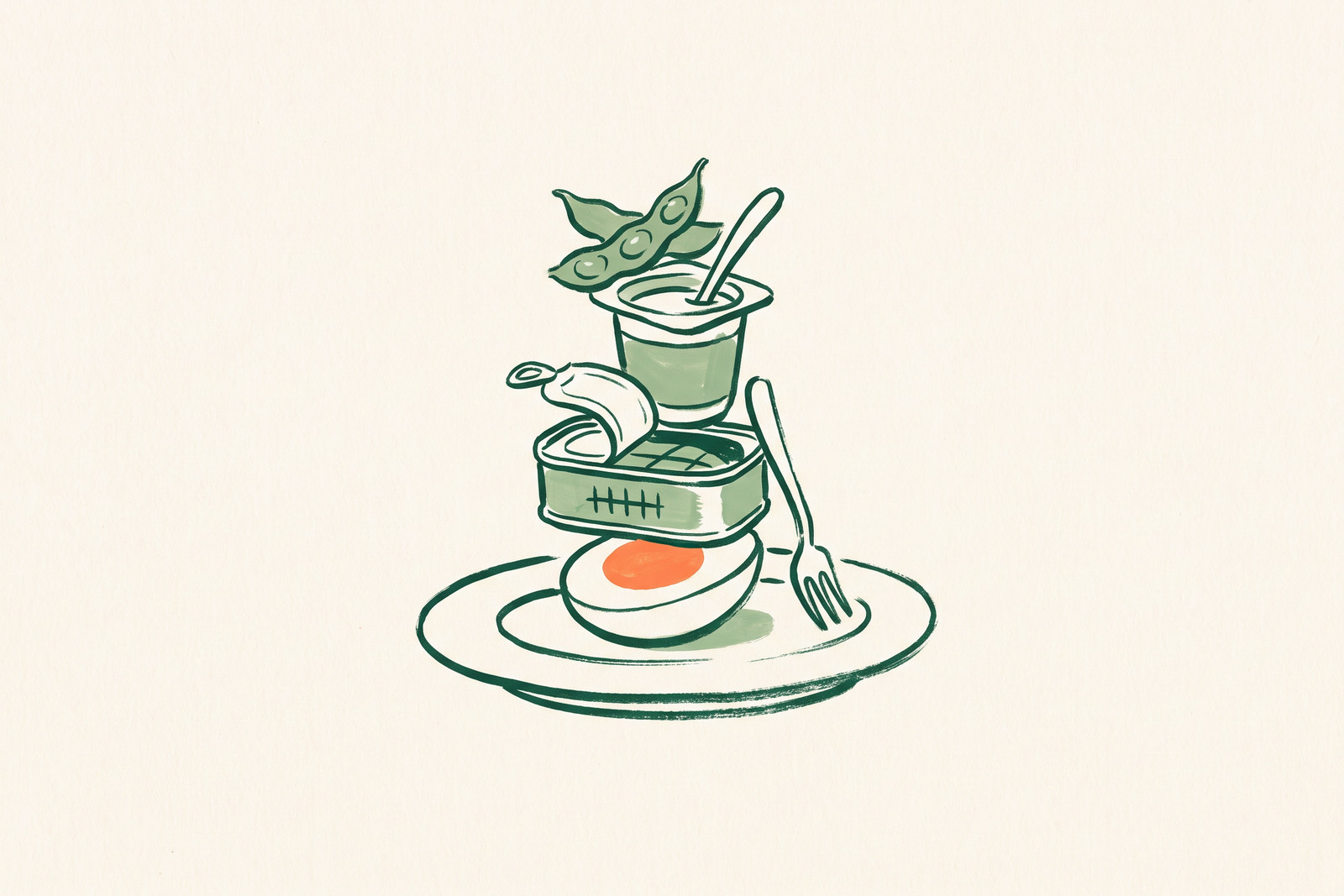
The best high-protein snack gives you 15–25 grams of protein for roughly 100–250 calories, tastes like something you want, and solves a real hunger gap. Greek yogurt, cottage cheese, tuna, deli turkey, edamame and a simple protein shake are reliable. Nuts are nutritious, but they are not a particularly protein-dense snack.
You do not need to snack to lose weight. If three meals cover your protein and hunger, stop there. A snack is useful when breakfast was light, dinner is late, or training leaves a genuine gap.
HeyCoach makes the snack decision quick: photograph the packet in WhatsApp and it logs the label's calories and protein against the rest of your day. You can try it free for five days.
Rank by protein per 100 calories
Calories and protein vary by brand, flavor and preparation. These are practical ranges based on common labels and USDA food-composition data; check the package you are holding.
| Snack | Typical portion | Calories | Protein | Protein per 100 kcal |
|---|---|---|---|---|
| Tuna pouch in water | 1 pouch | 70–100 | 15–20 g | 18–22 g |
| Nonfat Greek yogurt | 170–200 g | 90–130 | 16–22 g | 15–18 g |
| Whey or soy isolate with water | 1 scoop | 100–140 | 20–27 g | 17–21 g |
| Prawns or shrimp | 100 g | 90–110 | 20–24 g | 20–22 g |
| Low-fat cottage cheese | 150 g | 120–160 | 18–22 g | 13–15 g |
| Lean deli turkey | 85 g | 90–130 | 15–20 g | 14–17 g |
| Shelled edamame | 100 g | 120–140 | 11–13 g | 8–10 g |
| Two eggs | 2 large | 140–160 | 12–14 g | 8–9 g |
| String cheese | 1 piece | 70–90 | 6–8 g | 8–9 g |
| Roasted chickpeas | 40 g | 150–190 | 7–9 g | 4–5 g |
| Almonds | 28 g | 160–180 | 6–7 g | 3–4 g |
Protein-per-calorie is one lens, not the whole job. Edamame brings fiber. Eggs can feel more like food than a shake. Nuts pack energy conveniently for someone who struggles to eat enough. Choose for your actual day.
Store-bought snacks that do the job
Plain or lightly sweetened Greek yogurt
A single cup can deliver around 17–20 g protein. Add berries for volume or a little cereal for crunch. Check flavored versions: some keep the same protein with modest added sugar, while others double the calories.
Cottage cheese
It works sweet with fruit or savory with tomato, pepper and herbs. Individual cups make portions obvious. Sodium can be high; that may matter to your clinician or create temporary scale water, but it does not create body fat overnight.
Tuna or salmon pouches
They are compact and protein-dense. Flavored pouches may add oil or sugar, so read the label. Rotate fish choices rather than eating high-mercury species every day; FDA/EPA fish guidance is useful if you are pregnant or breastfeeding.
Jerky and meat sticks
Look for at least about 10 g protein per 100–130 kcal. Some sticks contain much more fat and less protein than their branding suggests. Sodium is usually high. That can be fine in context but is worth knowing.
Protein bars
A useful bar often has 15–25 g protein and 180–250 kcal. A 360-kcal bar with 12 g protein is closer to a candy bar with a protein halo. That does not make it forbidden; it makes it a different trade.
Ready-to-drink shakes
These are convenient when refrigeration or preparation is impossible. Compare serving size, calories and grams of protein, and choose brands that disclose third-party testing if supplements are a major part of your diet. Whole foods usually add more chewing, texture and micronutrient variety.
Five homemade snacks under about 250 calories
1. Yogurt bowl: about 180 kcal, 20 g protein
Mix 200 g nonfat Greek yogurt with berries and cinnamon. If plain yogurt is too tart, a small amount of honey can still fit—just count it.
2. Savory cottage cheese: about 190 kcal, 22 g protein
Use 170 g low-fat cottage cheese, chopped cucumber, tomato, black pepper and hot sauce. Most of the calorie uncertainty is in the cottage-cheese label, not the vegetables.
3. Eggs plus egg whites: about 210 kcal, 25 g protein
Cook one whole egg with 180 g liquid egg whites and spinach. The whole egg adds flavor; the whites raise protein without many calories.
4. Edamame with salt and lime: about 190 kcal, 17 g protein
Microwave roughly 150 g shelled edamame. It is less protein-efficient than tuna but brings fiber and feels like a substantial bowl.
5. Quick turkey roll-ups: about 200 kcal, 24 g protein
Roll 100 g lean turkey around pickle spears or peppers with a thin spread of mustard. Cheese is optional; adding two slices can raise both protein and calories considerably.
A worked afternoon decision
You have eaten 1,050 kcal and 72 g protein. Your targets are 1,750 kcal and 130 g. Dinner will probably be around 550 kcal with 35 g protein.
Without a snack, the day would finish near 1,600 kcal and 107 g—23 g short on protein. A 120-kcal shake with 24 g protein lands you near 1,720 kcal and 131 g. It fills the numerical gap cleanly.
But if you are hungry and want to chew, 150 g cottage cheese plus an apple might be 250 kcal and 20 g. That would land around 1,850 and 127 g. One day 100 kcal over is not a failure, and the more satisfying choice may prevent random grazing later.
The right snack is the one that improves the whole evening, not just the ratio column.
The foods with a protein halo
Nuts and nut butter
Nutritious, satisfying and rich in unsaturated fat—but calorie-dense. Two tablespoons of peanut butter commonly provide around 190 kcal and 7 g protein. Use them because you like them, not as your most efficient way to close a 25-g gap.
Granola
Oats, nuts and seeds sound protein-forward. Many granolas supply only 4–6 g protein in a 200-plus-kcal portion. Pair a small amount with Greek yogurt rather than making it the base.
Hummus
Hummus is a useful dip with fiber and flavor, but two tablespoons often have only 2 g protein. Edamame dip, Greek-yogurt dip or a larger meal may fit better when protein is the priority.
Cheese
Cheese is real food with real protein, but many varieties provide 6–8 g for roughly 100–120 kcal. A light cheese or cottage cheese may be more efficient. Full-fat cheese can still fit—measure the piece once so “a little” stays honest.
“Protein” cookies and chips
Read the ordinary Nutrition Facts, not the front. Compare the whole package, not a partial serving. If the snack has 15 g protein but 420 kcal, it may work as a meal component rather than a casual add-on.
How to choose in 20 seconds
Look at the package and ask:
- How many servings am I actually eating?
- Does this give at least 15 g protein?
- Do the calories fit the hunger and the rest of the day?
- Will I enjoy it enough to stop looking for another snack?
For a high-protein goal, a simple benchmark is 10 g protein per 100 kcal or better. It is not a law; it is a fast filter.
If you need your daily number first, see how much protein to eat while losing weight. To keep store-bought entries honest, use the label method in how to count calories.
Use the protein calculator to estimate the day, then the macro calculator to see how a snack fits.
FAQ
What snack has the most protein for the fewest calories?
Lean seafood, tuna in water, nonfat Greek yogurt, egg whites and protein isolate are among the most efficient common choices. Your exact winner depends on the label and portion.
Are high-protein snacks good for weight loss?
They can help you hit protein and manage hunger, but they still count toward total calories. Adding a protein snack without adjusting the rest of the day can reduce or erase the deficit.
What is a high-protein snack without dairy?
Try tuna or salmon pouches, lean poultry, eggs, edamame, tofu, roasted broad beans, seitan, or a soy/pea protein shake. Check labels because protein density varies widely.
Sources
- USDA FoodData Central food-composition database
- FDA guide to using the Nutrition Facts label
- Schoenfeld and Aragon on daily and per-meal protein
- FDA/EPA advice about eating fish
The easy way to do this
Send HeyCoach a photo of the packet and it can use the printed nutrition instead of guessing from appearance. Calories and protein land on the same meal card, and a reply fixes the serving if you ate half or two. The snack stays a ten-second choice inside WhatsApp. Try it with your next snack: five days of Pro are free, no card needed.
More on Protein & what to eat
Editorial and review policy. No independent dietitian review is claimed unless a reviewer is named.
HeyCoach is a nutrition coach, not a medical service. This article is general information, not medical advice — talk to your doctor before changing your diet if you have a medical condition, are pregnant, or take medication.