Why MyFitnessPal entries are wrong, and how to stop scrolling through 15 versions of grilled chicken
Most MyFitnessPal foods are member-submitted, so the same grilled chicken shows up at 100 to 200 kcal. How to pick the right entry in seconds, or skip the search.
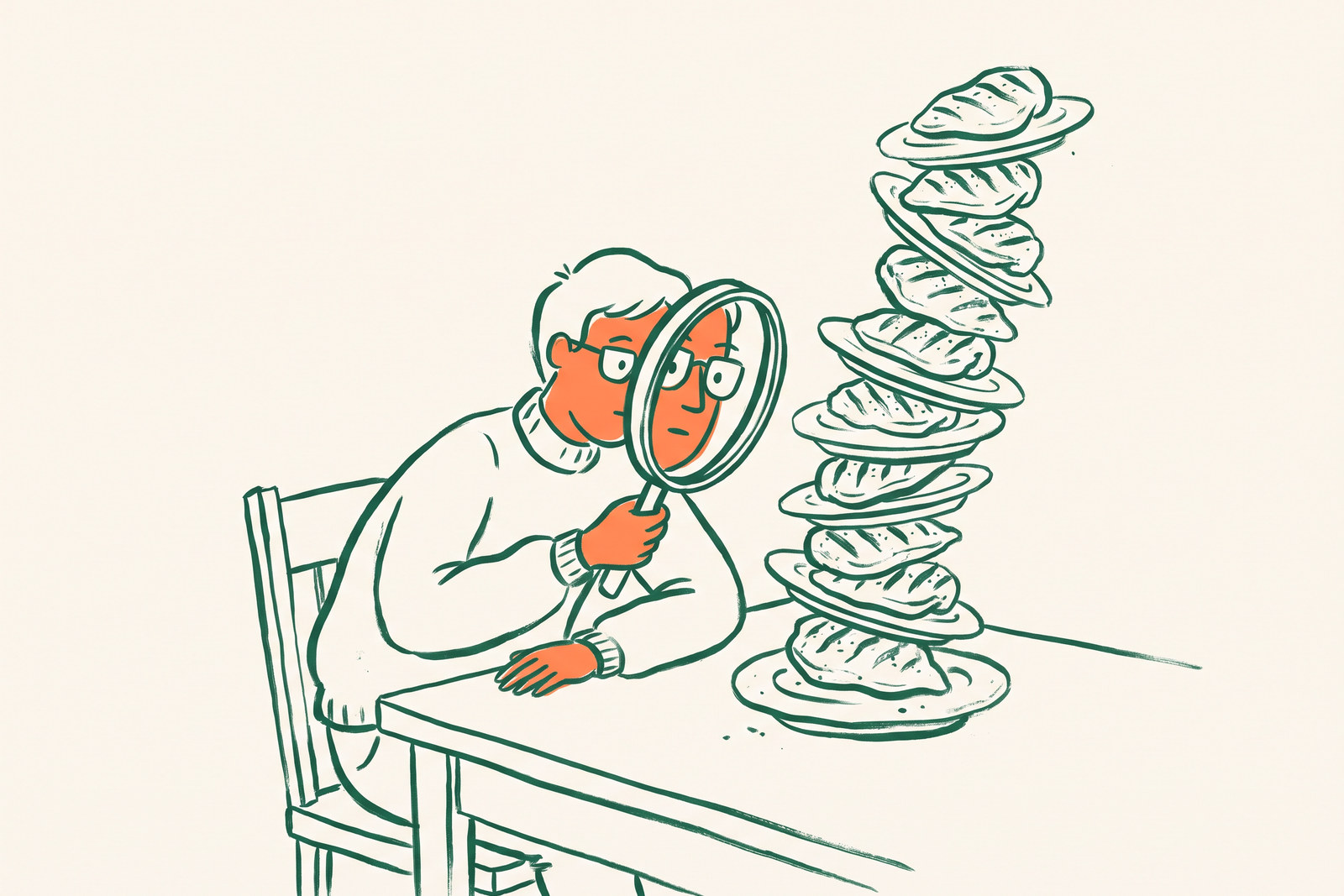
MyFitnessPal entries are wrong so often because most of the database is submitted by members and never reviewed. MyFitnessPal's own help center says the green check mark means the company reviewed that entry; everything without it is a member's typing, and the blog admits those entries can be outdated or incomplete. Search "grilled chicken breast" and the list runs from about 100 to over 200 kcal per 100 g for what looks like the same food. Pick a wrong one at every meal and the day drifts by 100 to 300 kcal without a single typo on your side.
The fix is not a better search habit; it is fewer searches. Below: why the list looks like that, a three-second rule for choosing, and how to stop choosing. HeyCoach does the last part in WhatsApp: describe the food or send a photo, and the estimate comes back with its assumptions written out, free for five days.
Why the same food has fifteen entries
Anyone with the app can add a food to the public database, and millions of people have. The same chicken breast gets entered raw and cooked, with and without skin, per 100 g, per ounce, per "1 breast", per "1 serving", by a brand in one country and a brand in another, and by someone who typed the fat column into the carbohydrate field. None of those entries is deleted when a better one appears, so the list only grows.
MyFitnessPal's answer is the check mark: entries its team reviewed, which it recommends choosing along with the "Best match" result. It also says a checked entry can still contain an error and an unchecked one is not necessarily wrong. That is honest, and it leaves the sorting to you.
The spread is not random. For "chicken breast, grilled", the usual suspects are:
| What the entry really is | kcal per 100 g | Why it exists |
|---|---|---|
| Raw, skinless | 120 | Someone weighed it before cooking |
| Cooked, skinless, no oil | 165 | The reference value |
| Cooked with skin | 195 | A different cut of the same bird |
| Cooked in a tablespoon of oil, logged as "grilled" | 230 | The oil went into the chicken's entry |
| "1 breast" at 140 g, shown per piece | 230 per piece | Not per 100 g at all |
Every row is a true number for something. The error is picking a row that is not your plate.
The research: the entries are fine, the choosing is not
The best test of a crowdsourced database is a 2020 study in the Journal of Medical Internet Research. Fifty adults kept food records; researchers calculated intake once from Belgium's reference database and once from MyFitnessPal. After the researchers cleaned the MyFitnessPal entries, energy intake agreed with the reference at r = 0.96. The word doing the work is cleaned: trained people chose the right entries. Left to a hurried user at lunch, that is exactly the step that goes wrong. Evenepoel et al., JMIR, 2020
A three-second rule for choosing an entry
- Check mark or "Best match" first. If neither exists for your food, suspect the whole list.
- Match the state. Raw or cooked, with or without skin, drained or not. Cooking changes weight, not calories, so a raw entry on a cooked weight is off by 30 to 40 percent.
- Sanity-check against a reference range. Ten numbers cover most of what people log:
| Food, per 100 g | Reference |
|---|---|
| Chicken breast, cooked, skinless | 165 kcal |
| Lean beef, cooked | 200 to 250 kcal |
| White rice, cooked | 130 kcal |
| Pasta, cooked | 158 kcal |
| Potato, boiled | 87 kcal |
| Egg | 143 kcal (72 per large egg) |
| Olive oil | 884 kcal (119 per tablespoon) |
| Cheddar | 400 kcal |
| Banana | 89 kcal |
| Greek yogurt, plain, whole milk | 97 kcal |
Values from USDA FoodData Central, rounded. An entry more than 20 percent away from the reference for a plain food is the wrong row; the calorie chart has a longer list.
Where the scrolling never pays off
Home cooking. There is no right entry for your mother's stew. Build the dish once from its ingredients with the recipe calculator, weigh the pot, and save it.
Restaurant plates. Entries for "pad thai" range from 300 to 900 kcal because plates do. A photo and an honest portion estimate beat a list.
Packaged food without the scanner. MyFitnessPal's barcode scanner has required Premium since October 1, 2022 (US Premium is listed at $19.99 a month or $79.99 a year as of October 2026). Typing the brand finds member entries of old formulations. If you do not pay, read the label and log per 100 g, or see alternatives with a free scanner.
How to stop choosing
- Save your own. MyFitnessPal's My Foods, Recipes and Meals are private to your account; once a food is saved from the label or from a weighed pot, you never see the public list for it again.
- Log the plain version, add the extras. "Chicken breast, cooked" plus "olive oil, 1 tablespoon" is two entries with no ambiguity; "grilled chicken with oil" is a guess.
- Describe it instead. HeyCoach takes "150 g of grilled chicken, a cup of rice and salad with a tablespoon of dressing" by text or voice note, returns one estimate with the assumptions it made, and takes a correction by reply ("it was 200 g") even days later. A photo works the same way: items, grams, calories and macros, with the hidden oil guessed and flagged. See how photo estimates work.
When you do stay in MyFitnessPal, set its macros protein-first and keep the three-second rule. For a broader look at which tracker is accurate for which food, see the most accurate calorie counter.
FAQ
Why does MyFitnessPal show different calories for the same food?
Because members add entries and the app keeps them all: raw and cooked, per 100 g and per piece, with and without oil, from different brands and countries. The check mark marks the entries MyFitnessPal reviewed; the rest are unverified.
What does the green check mark mean in MyFitnessPal?
MyFitnessPal's help center says it marks a food the company reviewed and believes is accurate and complete. It adds that checked entries can still contain the occasional error and that unchecked entries are not necessarily wrong.
Is the MyFitnessPal database accurate?
Accurate enough when the right entries are chosen: a 2020 study found energy intake agreed with a reference database at r = 0.96 after researchers cleaned the entries. The accuracy problem is choosing, not the existence of good entries.
How do I fix a wrong entry in MyFitnessPal?
You cannot edit a public entry someone else created. Create your own food from the label or a reference value, save it, and use yours from then on; for a dish, save a recipe or a meal.
Sources
- MyFitnessPal help: what does the check mark mean
- MyFitnessPal blog: how the food database works
- MyFitnessPal help: Barcode Scan requires Premium
- Evenepoel et al., accuracy of nutrient calculations using MyFitnessPal, JMIR 2020
- USDA FoodData Central: reference values in the table
The easy way to do this
The search list is the part of calorie counting that makes people quit, and it is the part HeyCoach removes. You describe the food in a sentence or send a photo in WhatsApp, the coach returns one estimate with its assumptions, and a reply fixes anything it got wrong, even days later. Nothing to download, and it remembers your targets, your saved dishes and what you ate yesterday. Send your next meal and try it free: five days of Pro, no card.
More on Tracking & tools
Editorial and review policy. No independent dietitian review is claimed unless a reviewer is named.
HeyCoach is a nutrition coach, not a medical service. This article is general information, not medical advice — talk to your doctor before changing your diet if you have a medical condition, are pregnant, or take medication.